A Vision Without a Plan Is Just a Wish
Most people have dreams — few have roadmaps.
They know what they want (freedom, purpose, income diversity), but not how to get there. So they wait for perfect timing or the right opportunity to appear.
But clarity doesn’t come from waiting. It comes from designing.
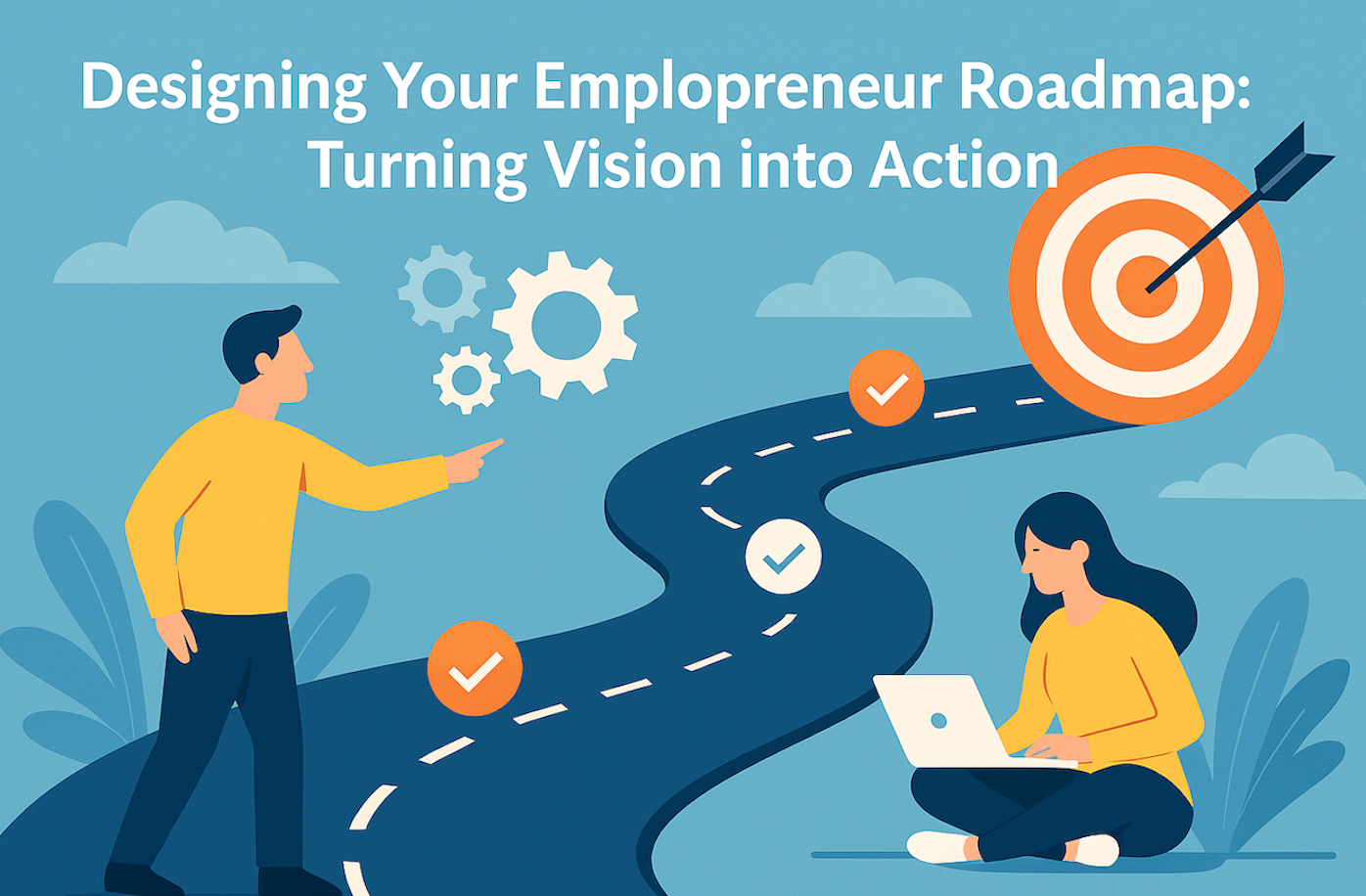
That’s where the Emplopreneur Roadmap comes in — a framework to help you turn your ideas and ambitions into measurable, actionable steps that fit your real life.
You don’t have to figure everything out overnight. You just need to know where you’re going and what the next step looks like.
Why You Need a Roadmap (Even If You’re Not Quitting)
A roadmap keeps your growth intentional, not accidental. It helps you connect today’s actions to tomorrow’s goals.
Without it, you risk drifting — busy but directionless.
With it, you move strategically — one improvement at a time.
Here’s what a roadmap gives you:
- Clarity: You know what you’re building and why it matters.
- Focus: You stop chasing distractions that don’t align with your goals.
- Confidence: You can measure progress and adjust intelligently.
- Freedom: You feel in control, not overwhelmed.
Your roadmap isn’t just a plan — it’s a promise to your future self.
Step 1: Define Your Destination
Before you set goals, you need direction. Ask yourself:
“What does my ideal future look like — three to five years from now?”
Be specific:
- What kind of work are you doing?
- How do you spend your days?
- What kind of income or flexibility do you have?
- What impact are you making?
Write your answers down. This becomes your “North Star Statement.”
Example:
“I want to work on meaningful projects that allow me to teach, write, and coach others while maintaining flexibility and income security.”
Once you define your destination, every step you take has context.
Step 2: Measure Where You Are
In Six Sigma terms, this is your baseline. You can’t improve what you don’t measure.
Take inventory of your current situation:
- What skills and resources do you already have?
- What areas of your work or personal life are draining energy?
- What’s missing — skills, systems, or support?
Use your Career Audit from a previous blog post to rate yourself in five categories:
- Career Satisfaction
- Skill Growth
- Energy Levels
- Contribution
- Alignment
This data gives you a clear starting point — not for judgment, but for direction.
Step 3: Analyze the Gaps
Now that you know your starting point and your destination, identify the gaps between the two.
Ask:
- What do I need to learn, build, or change to bridge the gap?
- Which goals are within my control right now?
- What barriers (mental, financial, or structural) need solving first?
This is your “Analyze” phase — where problems become projects.
Example:
If your goal is to build a side business but your gap is limited marketing knowledge, your project might be: “Complete an online marketing fundamentals course in 90 days.”
Step 4: Improve with Micro-Actions
Improvement doesn’t happen in leaps — it happens in iterations.
The Emplopreneur approach is to build small, test fast, and learn continuously.
Use your Builder Hours to implement micro-actions:
- Create one landing page.
- Test one pricing model.
- Record one short video.
- Learn one new tool.
Every Builder Hour compounds. Over time, these small steps build a body of work — and a sense of unstoppable momentum.
Progress beats perfection, every time.
Step 5: Control and Celebrate
This is the step most people skip — sustaining success.
Control means creating systems that help you maintain your progress even when life gets busy.
- Schedule recurring Builder Hours.
- Review your roadmap monthly.
- Adjust your goals quarterly.
- Celebrate your wins regularly.
A roadmap isn’t static; it’s a living document.
It evolves as you evolve.
When you celebrate along the way, you train your brain to associate growth with joy — not just effort.
The Emplopreneur Advantage: Process Over Pressure
Most people build dreams under pressure. Emplopreneurs build them under process.
Instead of chasing quick wins, they create systems that compound value over time.
Instead of burning out, they pace themselves through continuous improvement.
That’s how real freedom is built — through clarity, structure, and consistent action.
Remember, your roadmap is more than a plan — it’s your proof that you’re in control of your growth.
Action Time
Ready to create your own roadmap? Start here:
- Write your North Star Statement — your clear vision of the next 3–5 years.
- Identify your top three gaps between where you are and where you want to be.
- Schedule your next three Builder Hours to start closing one gap this month.
Every great journey starts with a map.
Every Emplopreneur journey starts with a mindset.
Your vision, your process, your life — optimized.